


 Português
 French
Ideally, all pets should have medical check-ups regularly – ideally every 6 months and at least once a year. But when it comes to taking the cat to the veterinarian… the task can be complicated!
By nature, cats are somewhat independent and territorial, and even though some are more temperamental than others, they all like to be in control of their environment and to recognize the people, objects, and smells that surround them.
On the other hand, this need for dominance over their territory also makes them quite sensitive to changes in their environment. And when we introduce something new into their space or change their routine, stress levels start to rise.
In part, this is one of the reasons why a visit to the vet is a stressful event and responsible for turning many cats into real tigers during the appointment.
The change of environment, transport, the presence of other animals, and strange smells can cause the animal’s stress to skyrocket. In some cases, the mere sight of the carrier may be enough to cause panic in cats…and despair in their owners!
But taking your cat to the vet doesn’t have to be an unpleasant experience. There are ways to make transporting cats easier and calmer, while avoiding bites or scratches.
Here are some simple tips that can make a difference on your next trip to the vet with your cat.
#1 – Always transport your cat safely
Use a carrier or other suitable container for transporting animals. When choosing a carrier, pay attention to how it opens and look for one that allows you to open the box from the front and from the top, making it easier to remove or introduce your furry friend into the carrier.
#2 – Your cat should get to know the carrier.
At home, introduce the carrier to your cat gently and don’t rush them or try to force them into the transport box right away! Start by placing it in a spot where your cat usually spends time or where they can see it, and let their curiosity lead them to peek inside.
#3 – Make the space familiar and comfortable!
Sometimes, placing your clothing, blankets, bedding, or your cat’s toys in the carrier helps them feel confident and comfortable enough to enter.
Cats rely heavily on their sense of smell, and by recognizing your scents, they will feel more at ease in spaces.
Quite often, and particularly when cats are more nervous, the use of synthetic feline pheromones – smells only perceptible to cats – is recommended, as their calming properties help cats stay calm.
And remember, cats have a good memory! Don’t use the carrier only for trips to the veterinarian! Let the carrier be part of their everyday environment and as a means of transport to other more pleasant destinations.
#4 – During transport
Use a blanket to cover the transport box. This way, your cat will feel safer and calmer.
When carrying the carrier, avoid annoying your cat with swinging and banging against walls, your legs, or other objects.
If traveling by car, choose a safe place to put the carrier. Ideally, keep the carrier on a seat, with the seatbelt (to prevent slipping and shaking), or alternatively on the passenger footwell.
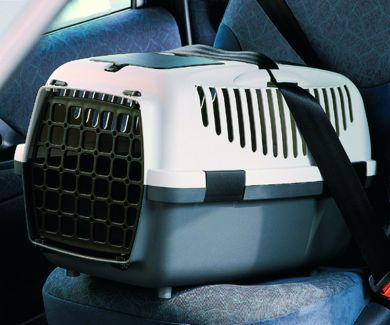
Remember that your pet should not interfere with your driving! Legally, owners can transport animals in whatever way they consider most convenient, as long as it doesn’t affect the driver’s visibility. And it’s better to play it safe because, in addition to the risk of accidents, in case of non-compliance the fine ranges from €60 to €600!
If you use public transport, try to place the carrier in a safe and stable spot, away from doors and loud noises, to avoid slipping and further irritation. And remember, always speak calmly to your cat.
#5 – Avoid motion sickness
To avoid your cat getting motion sickness, don’t feed them in the hour before transport and drive calmly, also avoiding excessive noises.
#6 – Upon arriving at the Veterinary Center
When you arrive at your veterinary center, if your cat is very stressed, keep them in the car until the time of your appointment. And once inside, avoid confrontations with other animals and exposing your cat to the usual noises of a veterinary space.
#7 – On the way back home
When you return home, let your cat rest for a while inside the carrier. And finally, open the door and let them come out again into their familiar environment.
Among all these steps and after the trip, always remember to praise your cat in a gentle tone. If there is no medical contraindication, give them some treats at home: for example, a can of wet food or any other snack they like.
We hope these recommendations are useful to you and that your next visits to the vet are happier! In any case, if your cat refuses the idea of the carrier, try talking to your veterinarian about the specific case of your furry friend.
